Monday, April 17, 2023

Friday, June 25, 2021

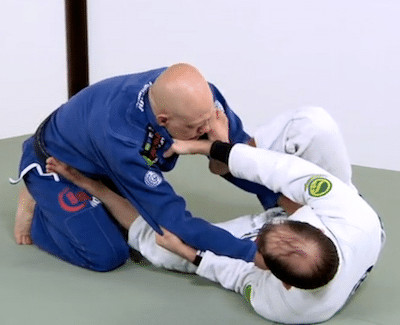
Newaza Etiquette by Keenan Cornelius

 Newaza practice can be grueling and difficult at times, leading to frustration and reliance on bad technique and pain-compliance type moves. As we are here to learn good form in a safe environment, please take a moment to watch this video by BJJ expert Keenan Cornelius. 

Note: regarding pressure point/pain compliance moves and finger grabbing during training. It is one thing to want to emulate live/competition environmemts where opponents may try these types of moves, but causing your training partners to unnecessary pain just showcases your lack of technique and reliance on moves that you can't rely on. It is the gentle way, not the 'dirty tricks that don't work on people who are better than you' way.

Clearly judo newaza and bjj practice are different, so watch with a grain of salt, but the overall lesson is the same: the golden rule applies in the dojo, so do your best to be kind to your training partners!


Monday, May 17, 2021

Congrats to Sensei Castillo - Bronze at Senior Nationals

Sensei Anthony Castillo took Bronze at the 2021 Senior Nationals. Excellent work sensei!

Friday, May 7, 2021

Kumi Kata for O/Ko Uchi Gari by Sensei Go Tsunoda

 Note: Video is not in English (or Japanese)

Sensei Go Tsunoda is a master of kumi kata (grip fighting)

Kumi kata can difficult to learn, and is one of the base defining factors of an individual's style of judo, as it determines your style of kuzushi.

Watching the clip below allows us to catch a few pointers. Notice the following:

The move shown at the timestamp (8:40) is essentially an armdrag optimized for judo

An armdrag, familiar to bjj practicioners, wrestlers, and football players, is usually designed to let you get behind or past an opponent.

Sensei Tsunoda instead uses the motion to turn the opponent and set up his kuzushi for o uchi/ko uchi gari.

Steps

Key: 

Tori - you
Uke - person getting thrown
TR - tori right
TL - tori left
UR - uke right (your left)
UL - uke left (your right)

Both opponents start right foot forward (tai stance)

1. TL hand on UR sleeve, TR on UR collar - same side grip, both hands on the UR side. UR on TL collar, UL on TR sleeve.

2. Slowly/subtly load uke towards their right foot by pulling down uke's collar toward you with TR hand (imagine tryong to get to a bicep curl position), dropping your hips back slightly for power (pulling with body weight is more effective than arms alone)

3. In that instant, keep tight as you step towards uke w TL foot while at the same time opening/turning your body to the right (clockwise if looking from aboe), pulling uke w TR hand (bring your TR elbow out and up) down and away w TL hand to break the grip, off balancing uke to their front and exposing their back to you with full double control of their UL arm.

4. Lightly plant the TL (stepping foot) and face opponent, TR (now lead foot again) pointing toward uke and anticipating where uke will plant their feet. Your TR foot will be aiming between uke's foot as uke lines up perpendicular to your TR foot.

5. As your opponent turns to square up and shuffles their feet to balence,once more, use that moment to shuffle past and in between the uke's feet for the o uchi/ko uchi.

It's 2 kuzushi motions chained

The initial subtle pull can be considered its own kuzushi, turning you into a spring while pulling the uke slightly onto their right fot.

Coupling motions

One of the base kuzushi movementsassociated with foot sweeps is often called "turning the wheel/bus" here, where you imagine turning a circle, hqnds 180 degrees apart, staying parallel. This allows you to maximize the force going either clockwise or counterclockwise at any given moment. As you practice the movement, feeling the optimal planes for coupling your hands will allow for more comsistent grip breaking.

Don't let your right hand stop your o uchi/ko uchi entry

To finish the motion, if you don't allow your right arm to collapse/get out of the way, you will push uke away from you during entry and making your strp too shallow to complete the throw. Relax. Note: Keepingthe grip instead of letting go allows for seoi nage follow up combo.

Skip to 8:40

https://www.youtube.com/watch?v=Z9hLHNK565Y&t=524s 
Wednesday, March 11, 2020

Practice Cancelled

Due to the health risk the COVID-19 has created, the dojo will be closed to all dojo activities. This includes all beginners classes, regular keiko, and Friday nage-no-kata practice.
At this time, the closure is through the month of March.
Please stay tuned for direction for April.
Please stay safe and healthy.

Thank you!

Monday, March 2, 2020

Sensei Sakata's 3s Newaza Technique List - Groundwork Framework by Position

The 3s Paper
(Beginner)

Sensei Sakata complied a list of judo-focused newaza moves per position that he was generous enough to share with DBT. Enjoy!

  • Three Submissions
  • Three Sweeps
  • Three Passes
  • Three Escapes


Three Submission from North South


Three Submissions from Side Control


Three Submissions from Kesa Gatame


Three Submissions from Mount


Three Submissions from Back


Three Submissions from Turtle


Three Submissions from Guard


Three Submissions from Half-Guard


Three Sweeps


Three Close Guard Passes


Three Standing Passes


Three Leg Submissions


Three Escapes

Wednesday, January 22, 2020

Uchinata Kuzushi Principles - Kugisaki Sensei and Maruyama Sensei

Kugisaki Sensei and Maruyama Sensei explain 2 kuzushi styles for uchi mata

https://youtu.be/4W_Xr_oLObY

1. Draw style, pull opponent 90 degrees before wheeling around

2. Traditional entry where you meet opponent, and maximize body contact to force the turn

Saturday, October 5, 2019

Classic Judo Techniques of Legendary Senseis - Hal Sharp


Based on Hal Sharp's Classic Judo films from the 1950's.
Complete footage of legendary sensei's are shown here, including commentary and slow motion.

Best Movie Fight Scene Throw Award Goes to...

....Airplane!

Eat your heart out, John Wick

https://youtu.be/f4CizzE-zZo

Check the Seoi Nage at 0:21

Thursday, May 23, 2019

Junior Joint Practice @ DBT June 6

Thursday, June 6 - DBT Judo @ Denver Buddhist Temple - 6:45-8:15
For all vistors, please fill out the waiver ahead of time at
https://www.dbtjudo.com/p/guest-waivers.html

All CJL Junior Joint Practices:
https://www.coloradojudo.org/2019/05/junior-cross-dojo-joint-practices-june.html

June 3-6 - Junior National Training Camp - Denver, CO -

  •    Monday, June 3 - Denver Judo - 5:30-7:00
  •    Tuesday, June 4 - Northglenn Judo - 6:30-8:30
  •    Wednesday, June 5 - Gracie Judo - 6:00-7:30
  •    Thursday, June 6 - DBT Judo @ Denver Buddhist Temple - 6:45-8:15

For the DBT Judo practice, please fill out the waiver ahead of time at
https://www.dbtjudo.com/p/guest-waivers.html

Saturday, September 15, 2018

2018 Albert Tagawa Shiai Registration Now Open!

Please join us for the 65th Annual Albert Tagawa Shiai at DBT Judo
October 6th. Free Entry for Visitors
REGISTER HERE

Monday, September 10, 2018

4 Tips to Modify the Triangle From Guard For Judo (Sankaku Jime)

It's no secret that many Judoka are now cross training in BJJ in recent years to improve their newaza game. However, when it comes time for actual application, most judoka fail to apply triangle chokes from guard under randori/competition situations since Judo rules force a generally faster, less controlled style of Sankaku to be used.

Remember, you are in Judo to learn Judo - tackling a Judo competition from a Jiu Jitsu perspective is a surefire way of stopping yourself from progressing in Judo. However, a functional newaza game is arguably an important part of understanding traditional (historical) judo, and nowadays, a necessity for modern competition.


Important Note:
Grabbing the back of the head to finish the choke is somewhat inconsistently flagged in competition use due to a discrepancy in newaza education for referees. The reasoning is due to a healthy avoidance for neck/spine cranks, despite the fact that a crank requires the opposite effect on the neck as your legs impart during the choke as well as the restriction on the range of motion.

For competition, we suggest asking the head referees ahead of time.
Ryan Hall's videos will teach you how to properly finish the triangle without the head pull:
https://www.youtube.com/watch?v=rsNtpxKVn5M


4 Common Reasons Why the Triangle Fails For Judoka 

It is impossible to cover every possible variation of triangle and what can happen, so I will break down how to best minimize the opportunity cost in training time as well as literal energy needed to have a functional triangle game for Judo by summarizing 4 common failure points.
  1. Wrong Place, Wrong Time (Most Important)
    • Under Judo rules, it's important to remember something about the Guard position:

      If you're there, you messed up already
      Ignoring the Jiu Jitsu arguments about how inherently powerful the closed guard is, within Judo rules, the closed guard is not an advantageous position. From instant stand ups, ease of stalling, and generally being 1-2 steps away from getting Osaekomi'd combined with the added risk of the latter when attempting the technique, one could argue from the get go that if you can avoid being in guard to begin with, avoid doing so.

      When should you Triangle?


      Since "don't bother" isn't a real answer, you need to identify what situations going for the triangle is appropriate.

      While one should know how to set up the triangle from the time tested ways, pPractice the triangle under these 3 conditions, and opportunities will start to present themselves elsewhere:

      • Uke-side Scrambles from Gari-type throws

        Ideal example: If you can manage to land on your side post-Yuko level Ouchi, Kosoto where the tori does not have upper body control and you have 1 sleeve of connection.
      • Tori-side Failed Tomoe Nage/Sacrifice ScramblesFor both this and above example, the technique is most useful when you and the opponent end up at about the range in the picture below (note the sleeve control, foot on hip, and right foot on the inside of the shoulder).

        Image result for sleeve control guard bjj
        image by Stephen Kesting, grapplearts.com

      • Also note that the descriptions read "scramble," as having a muscle-memory set plan under these conditions gives this technique its teeth in the midst of the chaos - In perfect position to shoot your legs into position and clamp the triangle on, less likely for the ref to call for stalling.
      • Partial Triangle to Sweep Once Opponent Starts Stack Sequence
        https://www.youtube.com/watch?v=c-V3tDXKUE4

        See #2 below for avoiding this situation to begin with
  2. Poor Distance & Posture Management/No Kuzushi
    • You might think "Kuzushi? There's no balance issues here, it's a choke!"
      Nope! For the triangle choke in particular, it's not just a step-by-step set of leverage movements as most judoka think of jiu jitsu techniques. Without off balancing, you are at a huge risk of either a stack or lift.

      If you find yourself getting stack countered often, or just failing to get in position to begin with, look at these videos for proper positioning and posture tips (Jiu jitsu focused, will need modification):
  3. Finishing the Triangle is Hard
    • Due to an inability to finish the triangle and while opponents stall out the choke, a lot of people get frustrated and eventually give up on the triangle choke. Going through all the effort of getting the choke in place only to get stood back up leaves you spending TONS OF ENERGY both physically and mentally. This can be fixed with learning a couple of leverage tricks combined with improving your finishing squeeze (eg: If you just try to squeeze your knees together, this is the section for you).
    • 4 Technical tips to finish the triangle

      https://www.youtube.com/watch?v=r-QDTYnGyCw
      Eddie Bravo talks about developing a good squeeze (Rear Choke, but mentality applies)


      https://www.youtube.com/watch?v=uCgMoVz6904
  4. Sloppy Armbar/Sweep/Recovery Transitions
    • Finally, this last one takes into account that you need to understand that most of your  Triangles will fail, and without a fallback/follow up plan, your failed attempts will inevitably lead to losing any faith that the triangle is a viable technique, because you keep getting passed and eventually pinned down.

      In order of importance, the follow ups most useful for judo competition are
      (There are too many variations to really list):
      1. Armbar
        The natural follow up to a failed triangle, the positioning requires only minor adjustments, and is arguably the easier and quicker technique to finish.

        Search:
        https://www.youtube.com/results?search_query=triangle+to+armbar
      2. Guard Recovery
        Upon failure of both triangle and armbar, a practiced guard recovery will prevent the pass, and allow you to stall into a stand-up to prevent further massive expenditure of energy.

        Video:
        https://www.youtube.com/watch?v=KX1G2RcZ6ro
      3. Sweep
        Sweeps requires a practiced understanding of shifts in Center of Gravity and a good sense of timing, so are not suggested as the primary go to. However, once this understanding is achieved, sweeps will lead your newaza game to a whole new level.

        Search:
        https://www.youtube.com/results?search_query=failed+triangle+sweep
      4. Turtle
        In case you forgot, we're talking about Judo!
        Turtling, combined with a little explosive movement when opening up your failed triangle (foot to hip, shrimp up, toss over-the-head leg towards the ground as you face towards it as well), is an effective stall out.

        Appropriately enough, there are a wealth of techniques that allow you to roll back into a triangle from the turtle for those last-ditch submission attempts with 15 seconds left on the clock.

        Search:
        https://www.youtube.com/results?search_query=turtle+triangle+bjj
      5. (Misc - other options)
        Note that the first 2 sets of techniques in the following video are generally considered illegal in judo competition

        https://www.youtube.com/watch?v=MersUxFbTSg

Summary:

Every Judo throw can be summarized in three parts:

Off Balancing, Getting in Position, and Execution of Technique

It helps to think about Chokes and Armbars the same way. It's not that the guard/triangle doesn't work it's that one must learn how to pick the battles where they are most useful.

Triangles done improperly are a MASSIVE drain on your energy reserves, and without taking this into account, and without having the right follow up techniques in mind, will leave you at  an extreme disadvantage in competition.

On the other hand. done correctly, triangles will open you up to potential victories while at a disadvantage, and are one of the most useful submission toolsets to have in your arsenal.


Friday, September 8, 2017

How to Throw Kata Guruma Without Grabbing the Leg


Fireman's Carry Without Grabbing a Leg


Opponent has single lapel grip with lead land. Break lapel grip with both hands at sleeve

Transition inside hand into same side lapel


Load opponent, subtly pulling sleeve down and leaning in with the hips away, outside leg in the back. leaving space. (Outside is left in this instance)


Kuzushi by pulling arm and shoulder tightly up and across your chest, sleeve arm crossing under the lapel grip. Simultaneously launch forward with your outside rear leg while dropping and turning into your opponent


This should effectively leave you dropped in front of your opponent while arcing his body over your shoulders, perpendicular to the direction you are pointing in.

As you feel your opponent going over, keep tight and drive your shoulder into him, dropping with the opponent to maintain control. 


Saturday, January 14, 2017

Wednesday, September 28, 2016

Nage No Kata by Kosei Inoue


\
Demonstration of the Judo Traditional Forms - Nage No Kata

取:井上康生六段 Tori:Kosei INOUE 6th dan
受:井上智和五段 Uke:Tomokazu INOUE 5th dan

Sunday, September 18, 2016

Traditional Judo Newaza - Masahiko Kimura


https://youtu.be/uZPW_lZYEnk

Old video of Masahiko Kimura, the Judo master & newaza expert whom BJJ grandmaster Helio Gracie fought (and survived against) showing the traditional Judo groundwork transitions from tachiwaza/throws,